



Most AED classes still rehearse a single, perfect shock scenario. Real events are not that tidy. In many sudden cardiac arrests the first rhythm is not shockable, the scene is noisy, and rescuers must switch tasks fast. Scenario control is the difference between learners who recite steps and responders who act decisively.
The Bigger Picture
AED training is not about memorizing button presses. It is about decision making under pressure, minimizing hands-off time, and following device prompts without losing situational awareness. High-impact sessions simulate the arc of a real call: initial assessment, immediate CPR, pad placement, rhythm analysis, shock or no shock decisions, and continuous cycles with team communication.
Why this matters: defibrillation is time sensitive, yet quality CPR fills the gap before and after shocks. Learners need repetitions that blend both. The training environment also needs to mirror the distractions of reality, such as bystander noise and confined spaces, while still providing structured, measurable feedback.
How to Choose the Right HeartSine Training Setup
For instructors using HeartSine training equipment, effectiveness comes from three elements working together: the trainer device, the scenario control method, and the debrief plan. Use these four criteria to select and configure a setup that fits your learners and environment.
Scenario control and flexibility
Look for a control method that lets you change rhythms, trigger shock prompts, and adjust coaching cues in real time. Being able to switch from a shockable rhythm to a nonshockable analysis mid-scenario forces learners to listen to prompts, not guess the script. A wireless remote enables this without walking over to the trainer unit, which preserves realism and keeps the focus on the team.
Realism without chaos
High fidelity does not mean high confusion. Choose HeartSine trainer models that replicate your field units, then layer distractions intentionally. Add time pressure, a bystander interruption, or a tight space, but one variable at a time. This scaffolding approach raises stress gradually and protects psychological safety while still building resilience.
Compatibility and scalability
Match the trainer model and accessories to your fleet. HeartSine 350P, 360P, and 450P trainers share a common platform, so one remote can manage multiple stations. For larger classes, ensure you can control two or more scenarios from a single instructor position to keep rotations tight and maximize learner time on task.
Feedback and measurement
Plan how you will capture performance: time to first compression, time to pads on, adherence to prompts, and interruptions during CPR. A simple stopwatch and a debrief checklist aligned to AHA action steps outperform vague feedback. If the trainer provides CPR coaching cues, integrate them into your scoring so learners are rewarded for following device guidance.
What the Standards Say
The American Heart Association Guidelines for CPR and ECC emphasize early defibrillation, high quality compressions, and minimal interruptions. For training, the education recommendations support deliberate practice, rapid cycles of feedback, and more frequent refreshers because skills decay quickly. Many programs target brief refreshers every 3 to 6 months with formal certification every 2 years.
For workplaces, OSHA encourages AED programs and training for expected responders, with policies for maintenance, drills, and medical oversight. If your safety plan lists designated responders, verify that they complete recognized CPR AED training and that practice scenarios reflect your site hazards, response times, and AED locations.
Fire, EMS, and campus programs should also align with local medical direction and written AED protocols. The common thread across these frameworks is the same: train to the device you deploy, measure the behaviors that matter, and repeat practice more often than recertification cycles alone.
Scenario fidelity is not only the device, it is the timing. When instructors can alter the rhythm or prompt at the exact moment a learner hesitates, the lesson anchors to that decision point. This is where a handheld controller is valuable, because you can nudge the path toward a near miss, then coach the recovery, which is the skill that transfers to real incidents.
A Recommended Option
For HeartSine training programs that want tighter scenario control, a wireless remote for the trainer line helps you shape realism while keeping eyes on your learners. Instead of breaking the scene to change a setting on the device, you can adjust rhythm selections, shock prompts, and CPR coaching cues from anywhere in the room. That preserves flow and lets teams practice continuous care decisions.
The HeartSine SAM AED Trainer Remote Control is designed for instructors running 350P, 360P, or 450P trainer models. In multi-station classes, it lets one instructor synchronize scenarios, for example triggering a second analysis window just as teams switch compressors. The result is more task time per learner and cleaner debriefs, since scenarios follow your plan rather than the default loop.
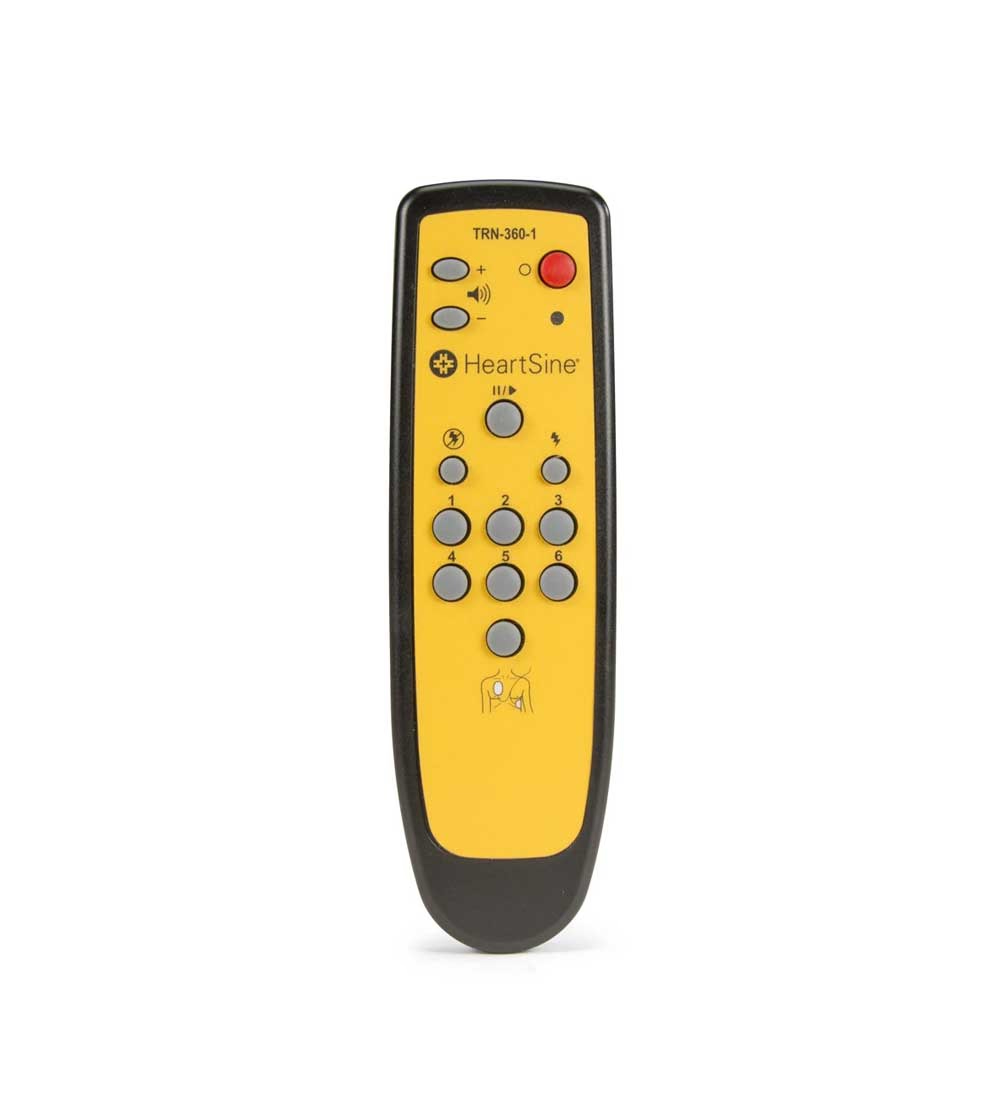
Our Pick: HeartSine SAM AED Trainer Remote Control
Mistakes to Avoid
Teaching only shockable rhythms. In reality many arrests present as nonshockable at first. Mix in no shock advised analyses so learners listen to prompts, resume compressions immediately, and do not hover over the device waiting for a shock.
Long pauses during analysis and shock. Coach role clarity so one rescuer handles pads while another continues compressions until the device instructs stand clear. Time the hands off interval and debrief any delay in restarting compressions after analysis or shock.
Static, one speed coaching. Start with calm walk throughs, then add a single realistic constraint like background noise or a tight workspace. Use a remote or instructor cues to shift the scenario at critical moments, not all at once, to prevent cognitive overload.
Effective AED instruction is a craft. Pick a training setup that mirrors your deployed HeartSine devices, control the scenario timing to create decision points, and measure the behaviors that save time on scene. With deliberate practice cycles and periodic refreshers, responders build automaticity in compressions, pad placement, and prompt adherence. When the real call comes, that is what closes the gap between recognition and first shock.

