



Many teams buy a great first aid or trauma bag, then treat refills as an afterthought. The result is a kit that looks full but is missing the exact items your calls demand. In this guide you will learn how to choose a refill kit that reflects your real risk profile, supports rapid care, and stays compliant with today’s standards.
The Bigger Picture
Refill kits are not generic top-ups. They are sustainment packages that keep your capabilities aligned with the incidents you actually face. A security team covering concerts needs more bleeding control and burn care than a low-risk office. A volunteer fire department that runs motor vehicle collisions will prioritize trauma pads, splints, and tourniquets over dozens of adhesive bandages. The right refill kit brings the quantities and quality levels that fit your environment, then packages them so providers can work fast under stress.
Think about your operational tempo. If you routinely operate in the field, you will deplete gloves, antiseptic, and gauze faster than a fixed facility. Your refill kit should match that consumption rate and standardize the brands and SKUs across rigs so muscle memory is the same for everyone. That consistency saves seconds on scene and simplifies training and inventory control.
How to Choose the Right Refill Kit
Start by mapping hazards to capabilities, then validate contents against standards and your previous call data. Use these four criteria to evaluate any refill kit before you buy.
Risk profile and call mix
List your top five call types from the last year. For each, mark the supplies you used or wished you had. High-energy trauma calls require tourniquets that are CoTCCC recommended, hemostatic gauze, trauma pads, and pressure dressings. Heat-related events point to instant cold packs and oral rehydration support. Choose a refill kit that over-weights items tied to your top calls, not a one-size-fits-all assortment.
Compatibility with your bag layout
Refills should fit your bag’s dividers and loops without overstuffing. Check sizes for trauma dressings, airway adjunct packaging, and splints. Modular pouches for airway, bleeding, and meds help you swap entire modules after a call. Look for labeling that is readable in low light and packaging that tears open cleanly with gloved hands.
Quality and standards alignment
For bleeding control, verify tourniquet models that are recognized by TCCC and hemostatic dressings with proven agents like kaolin. For workplace kits, align with ANSI/ISEA Z308.1-2021 Class A or Class B depending on risk, and follow OSHA 1910.151 guidance to provide supplies near hazards. Select nitrile gloves with adequate thickness and medical-grade adhesives that stay on through sweat, water, and movement.
Quantities, dating, and resupply plan
Quantities should support multiple patients before restock, not a single casualty. Confirm shelf life on medications, antiseptics, and burn gels. You should receive items with ample dating and lot numbers visible for tracking. Favor kits that ship with an inventory sheet and QR or SKU list so you can reorder fast after a call.
What the Standards Say
OSHA 1910.151 requires that employers provide adequate first aid supplies readily available to employees. It does not prescribe an item list, which is why ANSI/ISEA Z308.1-2021 is often used to define baseline contents. Class A kits cover common workplace injuries like cuts and minor burns. Class B kits are intended for higher risk environments and contain broader trauma capability with greater quantities. If your team encounters machinery, traffic incidents, or crowds, Class B content levels are usually the right starting point.
For life-threatening bleeding, the Committee on Tactical Combat Casualty Care and its civilian counterpart in TECC emphasize early tourniquet use, pressure, and hemostatic dressings. If your refill kit does not include a proven windlass tourniquet and gauze that works in wet, contaminated wounds, it is not aligned with modern bleeding control practice. The American Heart Association First Aid guidelines also support tourniquet use for severe bleeding when direct pressure is ineffective or not possible.
Agencies that respond to active threat or mass gathering events often add a dedicated bleeding control module to their base refill. That module can be staged separately at entrances or in vehicles, then integrated into the main bag after a call. Whatever standard you follow, document it, train to it, and audit your refills against it twice a year.
Standardize your refill around a Class B baseline with a bleeding control module, then scale by headcount and call volume. A practical rule is 2x the supplies you expect to use before access to restock. For small teams, that might be two tourniquets, two trauma dressings, and four pairs of gloves per responder. For larger venues, stage identical modules in multiple locations so responders can grab and go without relearning layouts.
A Recommended Option
If you prefer a ready-to-deploy solution rather than piecing together refills, a stocked bag and curated fill kit can accelerate standardization. The Large First Responder Bag w/ Deluxe Fill Kit, Navy Blue pairs a durable duty bag with a professional selection of supplies organized for quick identification. Foam dividers and elastic loops help keep trauma, airway, and general first aid items exactly where providers expect them.
For departments that share equipment across shifts or volunteers, the advantage is consistency. Every bag ships with a coherent layout and fresh, individually packaged components, reducing variance between rigs and crews. When you later order refills, you can mirror the included list and replace entire modules after heavy use. This approach keeps your operational focus on training and response while maintaining a reliable supply baseline.
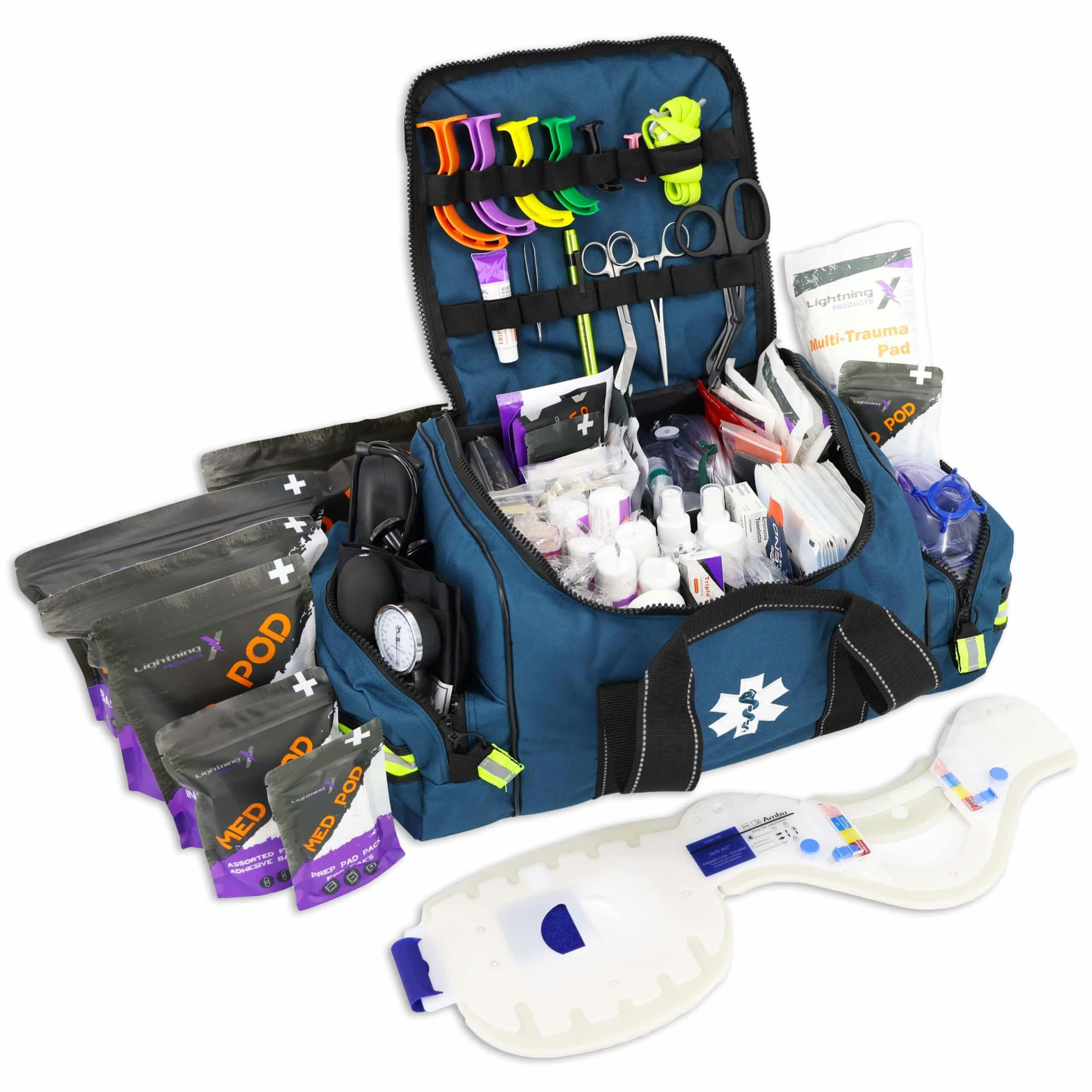
Our pick: Large First Responder Bag w/ Deluxe Fill Kit
Mistakes to Avoid
Buying a kit labeled general purpose for a high-risk environment. If your calls include MVCs, machinery, or crowds, a Class A assortment will fall short. Start with Class B levels and add a bleeding control module.
Ignoring bag fit and access. Oversized dressings that crush into zippers or tiny pouches that hide critical tools slow care. Match refill packaging to your bag’s dividers and stage lifesaving items at the very front of the workflow.
Letting expirations creep up. Antiseptics, burn gels, meds, and even elastic bandages age out. Set a monthly 10-minute cycle count, rotate stock first-in first-out, and record lot numbers so you can act quickly if a manufacturer issues a notice.
Refill kits are the quiet engine of medical readiness. Choose contents that mirror your hazards, adopt proven standards for bleeding and first aid, and organize supplies so anyone on your team can find what they need in seconds. With a thoughtful selection and a simple restock rhythm, your bag stays mission capable from the first call to the last shift of the week.


