



Uncontrolled bleeding is the leading cause of preventable death after injury. Many responders assume a tourniquet solves every major bleed, yet a large share of lethal hemorrhage occurs at sites where tourniquets are impossible to apply, such as the groin, axilla, and neck. This is where hemostatic dressings, combined with correct wound packing and direct pressure, change outcomes.
The Bigger Picture
Hemostatics are materials designed to accelerate clot formation at the bleeding source. In most modern products, the dressing is standard gauze that is either impregnated with a mineral activator or coated with a biopolymer that supports clotting. Their role sits squarely in the MARCH or XABCDE frameworks once massive bleeding is identified. If a tourniquet can be applied proximal to an extremity wound, that is often the fastest intervention. For junctional or irregular wounds that cannot be tourniqueted, hemostatic gauze plus firm, sustained pressure is the evidence-backed choice.
Two technology families dominate the market. Kaolin-impregnated gauze activates factor XII and accelerates the intrinsic clotting cascade. Chitosan-based dressings, often labeled as chito- or celox-type products, work through mucoadhesion and create a mechanical barrier independent of the patient’s clotting factors. Both technologies have robust support from animal models and operational use. Selection usually comes down to agency protocol, training familiarity, supply chain, and any specific patient considerations, such as known shellfish allergy history. True IgE-mediated reactions to chitosan are rare according to published data, but some organizations still prefer kaolin to avoid perceived risk.
In practice, field success with hemostatics depends far more on technique than chemistry. Expose the wound completely, identify the deepest bleeding point, aggressively pack Z-fold gauze to the source, then apply two-handed pressure without peeking. Reassessment and a secure pressure dressing or wrap make the difference between temporary control and sustained hemostasis during transport.
How to Choose the Right Hemostatic Dressing
Focus first on how and where you operate. The right hemostatic for a patrol officer or facilities team must be simple, fast to deploy under stress, and compatible with the most likely wound patterns. Use these four criteria to make a confident selection.
Coagulant mechanism and evidence
Kaolin accelerates clotting factor activation, while chitosan forms a mechanical seal that does not rely on the patient’s coagulation status. Look for products that appear in Committee on Tactical Combat Casualty Care guidance and have FDA clearance. Review independent swine model data with high-pressure arterial bleeds, which remain the benchmark for comparative efficacy.
Form factor and packability
Z-folded gauze allows rapid, controlled packing into narrow tracts without losing purchase. Rolled gauze can be effective but may be slower in gloves or in confined spaces. Sponge or pad formats are less versatile for deep, irregular channels. Choose packaging you can open with gloved, possibly bloody hands, ideally with tear notches that align to how you stage gear.
Usability under stress
In low light, rain, or movement, simplicity wins. Prefer dressings with clear usage printing, high-contrast tear indicators, and a form that supports tactile indexing. If you issue kits to mixed-experience users, pick the product you can teach in minutes and that supports a single consistent script: expose, pack to the source, hold pressure for 3 minutes, secure.
Environmental range and logistics
Confirm temperature tolerances for patrol cars, fire apparatus bays, and outdoor kits. Check shelf life, often 3 to 5 years, and put an inventory system in place for lot tracking. Standardize on one or two SKUs to simplify training and resupply, and confirm availability from multiple distributors to prevent stockouts during high-demand events.
What the Standards Say
The Committee on Tactical Combat Casualty Care recommends hemostatic dressings for life-threatening external hemorrhage at compressible sites when a tourniquet is not feasible or as an adjunct after tourniquet application if bleeding persists. Combat Gauze, a kaolin-impregnated Z-fold gauze, is widely cited as a primary option, with chitosan-based gauzes such as ChitoGauze and Celox Gauze listed as acceptable alternatives. TCCC emphasizes correct technique: pack to the bleeding source and hold direct pressure for 3 minutes or until hemostasis is achieved, then secure with a pressure bandage.
The American Heart Association First Aid science guidance supports hemostatic dressings for severe external bleeding when direct pressure alone is ineffective or impractical. For workplaces, ANSI or ISEA Z308.1-2021 sets minimum first aid kit content. It does not mandate hemostatics in every kit, but many agencies and enterprises add bleeding control kits that include tourniquets, hemostatic gauze, and pressure dressings. NFPA 3000, which addresses active shooter or hostile event response, likewise encourages access to hemorrhage control supplies for public safety operations.
Local medical direction, state statutes, and agency policies may further specify brands or training requirements. The common thread is consistent: hemostatic dressings are an evidence-backed adjunct to direct pressure, particularly valuable for junctional and deep wounds where tourniquets cannot be used.
Master the sequence before chasing brands. Expose fully, identify the deepest point of bleeding, pack the entire cavity tightly with Z-fold gauze, then apply two-handed pressure for at least 3 minutes. Secure a pressure dressing and reassess during movement. Technique, not logo, drives outcomes.
A Recommended Option
For law enforcement, campus security, and facility response teams that need a single pouch to address the most likely life-threatening injuries, a compact patrol-oriented fill kit that includes a tourniquet, hemostatic gauze, chest seal, and a pressure bandage is practical and defensible. It consolidates critical items that work together and it reduces the chance of missing a key component during a real call.
The Fill Kit for Officers Patrol Kit w/ C.A.T., QuikClot Combat Gauze, Chest Seal & Israeli brings those elements together in a familiar layout. QuikClot Combat Gauze provides the kaolin-based hemostatic capability for deep, packable wounds. The C.A.T. tourniquet supports rapid extremity control. A vented chest seal covers open chest injuries, and the Israeli pressure bandage secures hemostasis after packing. Agencies appreciate this format because it mirrors TCCC priorities and streamlines training: assess massive bleeding, apply a tourniquet if indicated, otherwise pack with hemostatic gauze, hold pressure, then seal or wrap as needed.
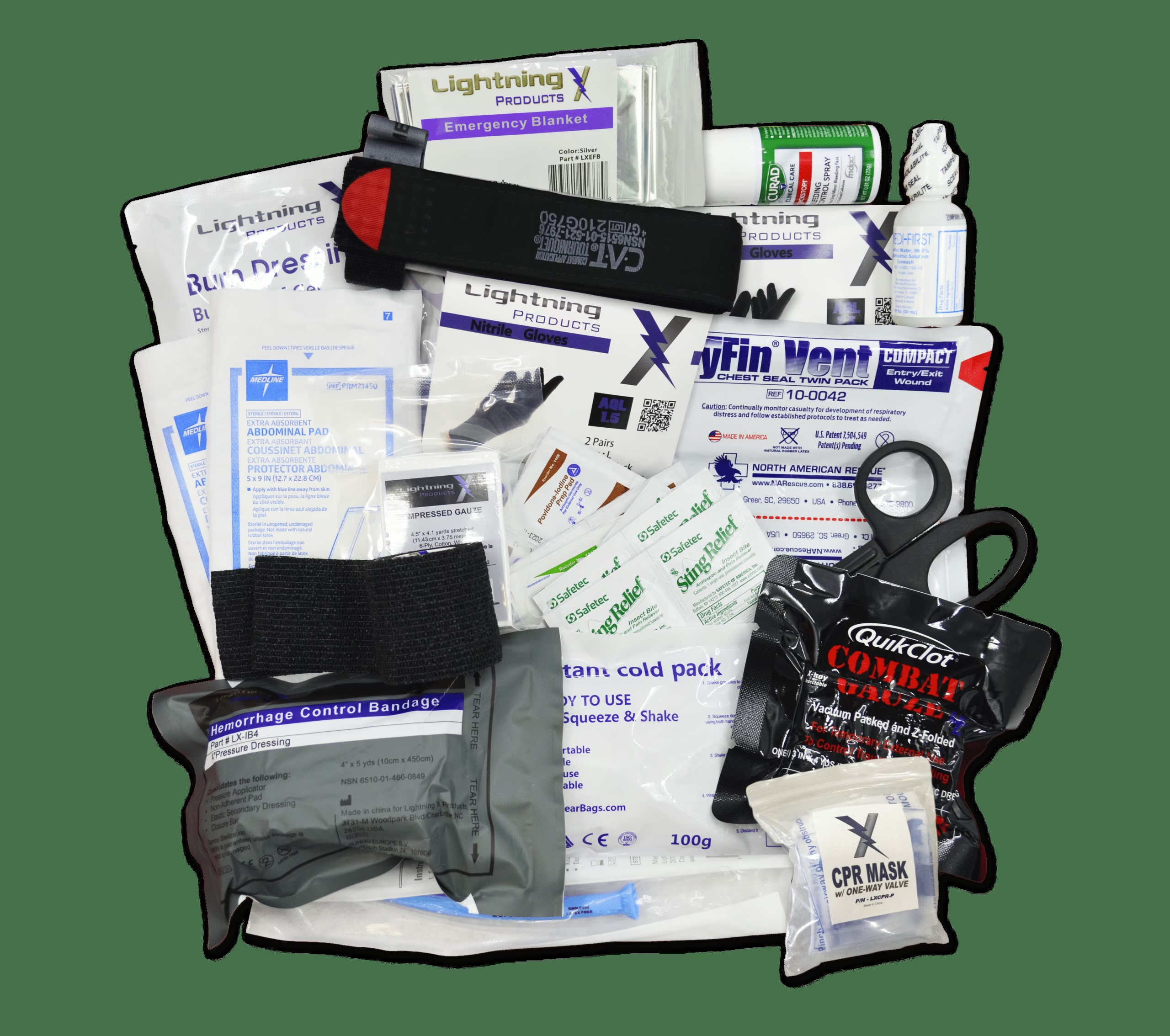
Our pick: Officer Patrol Fill Kit
Mistakes to Avoid
Topping, not packing: Placing gauze over the wound instead of packing to the deepest bleeding point leaves the artery open. Use firm fingertip pressure to feed Z-fold gauze to the source until the cavity is full.
Too little pressure, too little time: Effective hemostatics still require sustained force. Hold direct pressure for at least 3 minutes without lifting to check. If bleeding continues, add more gauze and continue pressure.
Poor sequencing and reassessment: Failing to expose the wound fully, skipping a tourniquet when indicated, or forgetting to secure a pressure dressing leads to rebleed during movement. Follow a simple script and reassess frequently.
Hemostatics are not magic. They are proven tools that work when paired with decisive action and correct technique. Choose evidence-backed gauze that suits your environment, train to a simple repeatable script, and stage gear where it will actually be used. When a critical bleed happens, those decisions pay dividends in seconds you cannot get back.


