


Maryland Food Service
Maryland AED Law for Restaurants and Grocery Stores
Yes, many Maryland restaurants and grocery stores must have an AED. Since January 1, 2025, Maryland law (Health-General § 21-330.3) has required each owner and operator of a covered grocery store or restaurant to place an automated external defibrillator (AED) in a prominent area that employees and customers can reach. A 2026 law, in effect since October 1, 2026, also requires a covered business to follow the state Public Access AED Program: register with the program and keep each AED and its supplies maintained to the manufacturer's and FDA standards.
Last reviewed October 7, 2026. Each statement is linked to its source below.
Who Is Covered
The law applies to grocery stores and restaurants, with size limits written into the statute.
- ✓Restaurants: the law does not apply to a restaurant with annual gross income of $1,000,000 or less (not counting sales for off-premises consumption), or with seating for fewer than 100 people. A restaurant is covered only if it has more than $1,000,000 of that income and seating for 100 or more.
- ✓Grocery stores: a store is a "grocery store" under the law if it has all major food departments (produce, meat, seafood, dairy, and canned and packaged goods), or at least one of those departments and at least 12,000 square feet of floor space.
- ✓Grocery store size limit: the law does not apply to a grocery store with annual gross income of $10,000,000 or less.
What the Law Requires
- ✓Place an AED in a prominent area, accessible to employees and customers (Health-General § 21-330.3(c)).
- ✓Register with the Public Access AED Program, overseen by the state EMS Board and the Maryland Institute for Emergency Medical Services Systems (MIEMSS). To qualify for and keep its program certificate, a grocery store or restaurant must register its name with the program (Education § 13-517, as amended in 2026).
- ✓Keep it working: maintain the functionality of each AED and all related equipment and supplies to the standards set by the device manufacturer and the U.S. Food and Drug Administration (Education § 13-517, as amended in 2026).
- ✓Report each use: a registered business reports the use of an AED to MIEMSS on the form MIEMSS provides (Education § 13-517, as amended in 2026).
The 2023 law also directs the Maryland Department of Health and MIEMSS to require covered stores and restaurants to register with MIEMSS so their AED locations are available to emergency dispatchers and they receive maintenance and recall notices. Registration details are on the MIEMSS AED program page.
Liability Protection
Under § 21-330.3(d), a grocery store or restaurant that has met the requirements of the section is not civilly liable for any act or omission in providing automated external defibrillation. A person who uses an AED in good faith, in a reasonably prudent manner and without pay is also not civilly liable, and neither the business nor a person is civilly liable for failing to use an AED on someone in sudden cardiac arrest.
AEDs for Restaurants and Grocery Stores
These AEDs are designed for public-access use, with voice prompts that guide the rescuer. Each card shows the current price, the same price you pay in the cart.

ZOLL AED PLUS
The ZOLL AED Plus features Real CPR Help technology that provides real-time CPR feedback on compress...

Philips HeartStart OnSite AED
Automated External Defibrillator Designed for the ordinary person in the extraordinary moment, Phi...
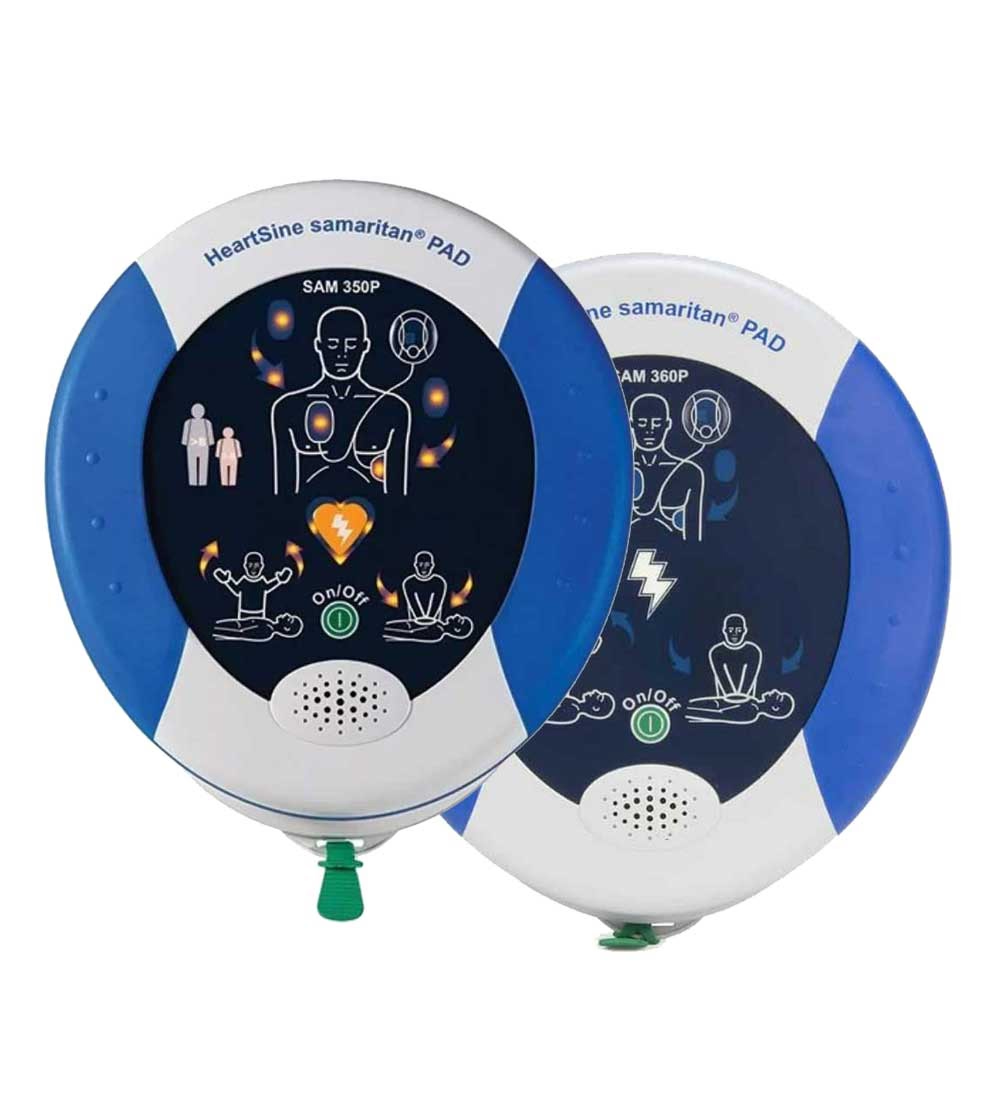
HeartSine Samaritan PAD 350P & 360P
The semi-automatic HeartSine samaritan PAD 350P AED and fully automatic HeartSine samaritan PAD 360P...
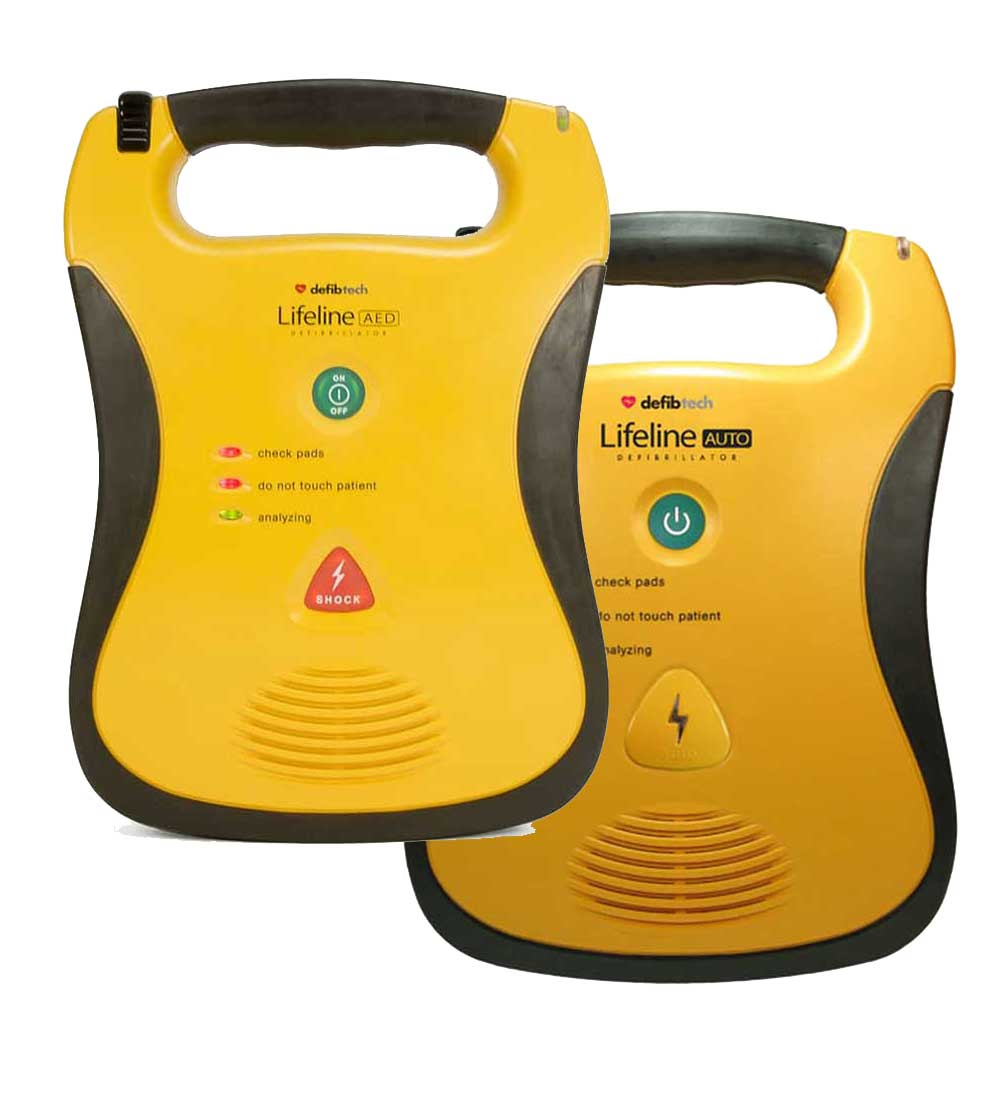
Defibtech Lifeline AED
The original Defibtech AED includes all mission critical features necessary to provide the most adva...
A wall mount or cabinet and a sign help staff and customers find the AED quickly.

HeartSine Wall Cabinet With Alarm
Compact wall-mount AED cabinet with built-in door alarm and 2 keys. Designed for HeartSine Samaritan...

Philips HeartStart AED Wall Mount and Signage Bundle
The Philips AED Wall Mount and Signage Bundle enhances the visibility and accessibility of your Phil...

Philips HeartStart AED Signage Bundle
The Philips AED Signage Bundle enhances the visibility and accessibility of Automated External Defib...
Buying for several locations? Request a quote. Our AED program can help you track pad and battery expiration dates.
Frequently Asked Questions
Do all Maryland restaurants need an AED?
No. The law does not apply to a restaurant with annual gross income of $1,000,000 or less, not counting sales for off-premises consumption, or to a restaurant with seating for fewer than 100 people.
Which grocery stores must have an AED?
A store with all major food departments (produce, meat, seafood, dairy, and canned and packaged goods), or with at least one of those departments and at least 12,000 square feet of floor space. A grocery store with annual gross income of $10,000,000 or less is exempt.
When did the Maryland requirement start?
The placement requirement began January 1, 2025. A 2026 law (Chapter 92, Senate Bill 24), effective October 1, 2026, added the Public Access AED Program registration and maintenance conditions.
Where does the AED have to be placed?
In a prominent area that is accessible to both employees and customers.
Do we have to register the AED?
Yes. A covered grocery store or restaurant registers its name with the state Public Access AED Program, maintains each AED to the manufacturer and FDA standards, and reports each use of the AED to MIEMSS.
Does the law protect a business whose staff use the AED?
Yes. A grocery store or restaurant that has met the requirements of the law is not civilly liable for any act or omission in providing automated external defibrillation.
Sources
- 2023 Laws of Maryland, Chapter 304 (House Bill 288): created Health-General § 21-330.3
- 2026 Laws of Maryland, Chapter 92 (Senate Bill 24): amended Education § 13-517 and Health-General § 21-330.3(c), effective October 1, 2026
- MIEMSS Public Access AED Program
This page summarizes state law for general information and is not legal advice. Laws, regulations and local rules change. Check with your state agency, local EMS agency or attorney before relying on it.
Related: AED Requirements in Maryland · AEDs for Restaurants